


.png)
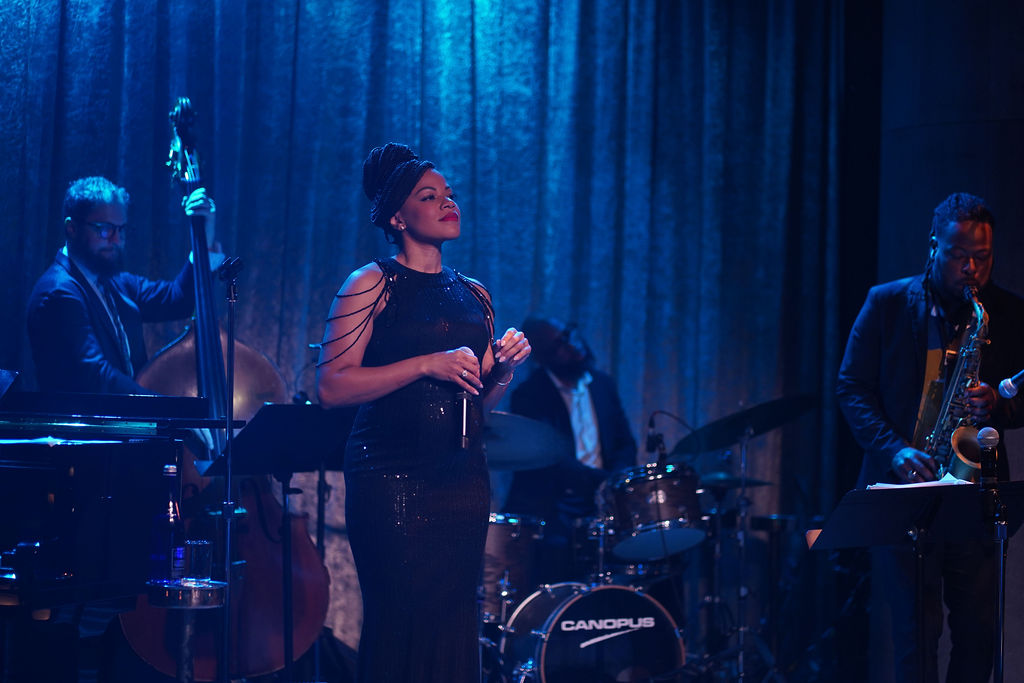
How did your career as a jazz singer begin?
When I was a kid, I always dreamed of being in entertainment. I was constantly putting on shows, turning anything I could find into a makeshift “microphone.” But as much as I loved performing, I was also terrified of singing in public.
The first place I ever really sang was in church. Even then, I needed my mom in the front row to calm my nerves. Over time, I started to notice how people responded when I sang, and that planted a small but powerful idea: maybe I could actually do something with this. I began using singing as my talent in pageants and eventually became a theatre major in college.
A major turning point came when my dad sent me to New York for my birthday. I was both scared and exhilarated by the adventure. During that trip, I saw my cousin perform in The Color Purple on Broadway, and I became completely captivated by the idea of living an artist’s life in New York City. After that, I decided to make the move.
Once in New York, I met incredible friends who introduced me to the Barry Harris workshop. Learning from such a legendary jazz pianist helped me discover great songs and understand my voice on a much deeper level. Not long after, I was asked to sing in a show. I said yes—but when the moment came, my nerves got the best of me. Discouraged, I stepped away from singing and chose to pursue other creative paths.
Then in 2021, everything shifted. I took a job at The Django, where I was surrounded by music every night. Being so close to it again stirred something in me, along with a growing anxiety about whether I would ever sing again. Eventually, I reconnected with someone from the very first show I had ever performed in and found myself back on stage.
That’s when I made a decision: I had to find out what was on the other side of that fear.
From there, I began singing around the city, which aligned perfectly with my next chapter at The Jazz Club at Aman New York. I joined the club in 2022 as General Manager, but soon found myself performing regularly as well—finally embracing both sides of who I had always been.
Tell us about your role at the famed Jazz Club at Aman NY! We love that you have the ability to keep the club running, while also making time for performing on stage yourself!
At The Jazz Club, I serve as the Director of Operations, which means I oversee the programming as well as the day-to-day operations of the space. It’s a role that requires a lot of moving parts, but I genuinely enjoy what I do. There’s something really fulfilling about helping create an environment where artistry can live and thrive every night. I truly believe we’re doing our part to keep live music alive in New York City and beyond, and I take a lot of joy and pride in being part of that.
Balancing operations with performing is definitely a challenge, but I’ve learned to take tasks one step at a time until I can get to the end of the day and finally reflect on the bigger picture.
When I’m performing, I really try to shift into a different mode. I almost treat it like stepping into a character. I try not to think like an operator while in performance mode. That said, it’s hard to completely turn it off. Sometimes I’ll notice little things in the room, and during intermission I’ll check in with the staff, or run over to the host area or kitchen just to make sure everything is still running smoothly. The key is that I trust my team. I have a great staff, and that trust is what makes it possible for me to do both.
At the end of the day, I want the space to feel special - not just for the artists, but for the audience too. I want people to come in, be present, and honor the transcendence of live music.

What’s your favorite part about the New York jazz community?
The New York jazz community is one of those rare spaces that somehow feels big and small at the same time. New York is obviously full of incredible musicians, but there’s still a sense of connection and camaraderie, like you’re stepping into a real circle of people who share something special.
The players here are truly on another level. There’s a skillset in this city that you don’t really find anywhere else, and being around it pushes you. In a way, New York is like jazz bootcamp–you always have to be better, always have to be listening, always have to be ready. Even the musicians who come here from somewhere else eventually earn their stripes if they stay long enough. The city shapes you.
Another thing I love is how much great music is constantly happening. There are always amazing artists coming through, and because so many people tour through New York, you get this unique opportunity to feel like you’re part of something global even when you’re staying in one place. There’s always someone new to hear, someone new to learn from, and someone new to connect with.
And honestly, New York is one of the most notable places in the world to play this kind of music. It’s a city where jazz is respected, where the history is alive, and where the standards are high. But what makes it special is that there’s still room for everyone. There’s a place for you, and there’s room to grow.
The Jazz Club has had some amazing performers since its opening! Is there one performance that was the most monumental/iconic for the space?
One of the most monumental weeks for The Jazz Club was when we had Christian McBride’s Big Band and Savion Glover in the same week. That stretch really felt iconic for the space, and it’s something I’m still incredibly proud of. Both of them are living legends who have brought people along with them throughout their careers, nurtured other artists, and helped shape the culture in a real way. Having them in the room in the same week was definitely a full-circle moment for me.
We also just started a recurring series with Black Thought of The Roots called Black Thought Presents: One of Those Nights at The Jazz Club. This is a huge moment, as I’ve been a big fan of his work for decades, and this series celebrates musicianship, art, and creativity. I’m so humbled that The Jazz Club gets to be part of that story, and also be the home to his first solo headline series.

Congrats on your most recent single, Night and Day! Do you have a favorite jazz vocalist that has inspired you?
Thank you! With “Night and Day,” I’ve definitely been thinking a lot about the vocalists who shaped the way I hear and feel jazz. Ella Fitzgerald and Nancy Wilson are two of my biggest inspirations - both of them set such a high standard in terms of phrasing, musicality, and the way they make a melody feel effortless.
I feel especially connected to Etta Jones, and she’s someone a lot of people don’t know as well. There’s a character in her voice that I’ve always been drawn to. It’s bluesy, soulful, and full of this rich cadence where you can hear the story and emotion behind every note.
That’s something I really want to emulate in my own work. I want to tell a story in how I make you feel, even beyond the words themselves. And I love that her voice isn’t what people think of as a “typical” jazz voice - you can hear the gospel and blues in it. That mix is a huge part of what inspires me.
Follow Along