


.png)
How did your career in the art & design world begin?
My involvement in the art and design world really began with my maternal grandparents who were both artists. They were always making art, and at 93 my grandfather still is creating. As a child, I went with them to gallery and museum shows and watched how deeply involved they were in their artistic communities. That early exposure shaped an artist-centered understanding of the art world for me.
I’ve always made art, but never thought of myself as an artist. I realized that I was most interested in analyzing art and learning about it, and I found myself more drawn to the ideas behind the work than in developing my own practice. I decided to study art history and design in college, and interned at galleries, where I found that the business side of the art world was often less focused on artists than I had expected.
While I was working, I would find myself thinking about the small changes I would want to make if it were my grandparents being represented by a gallery. When my grandparents’ building of artist studios was sold, and I received a small portion of the sale, I realized there was nothing I wanted more than to start a gallery of my own. It felt like a chance to build the kind of space I had always wished existed for artists like them.
Tell us about your contemporary art gallery, Harsh Collective!
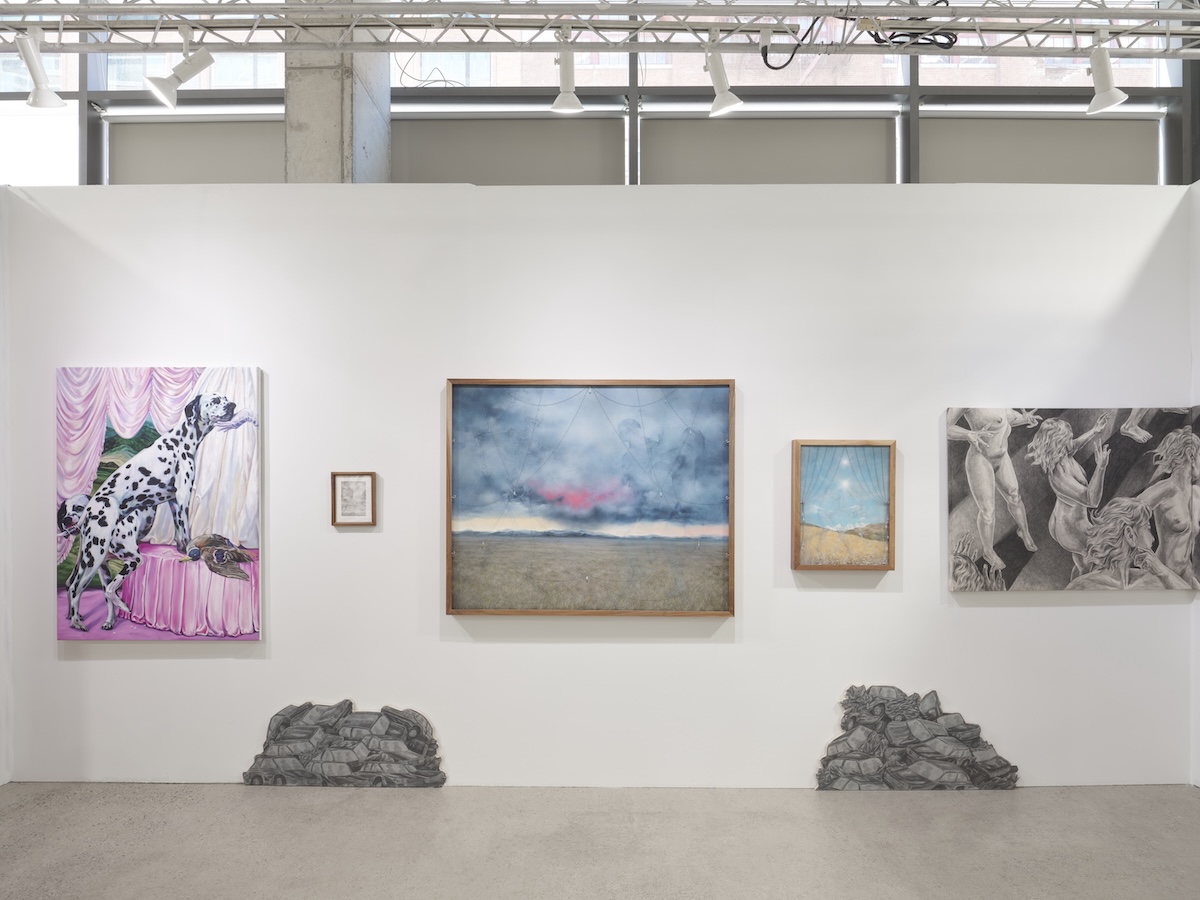
Harsh Collective is a nomadic gallery based in New York City that supports emerging artists. This means that the gallery does not have a permanent brick-and-mortar space. Instead, I alternate between pop-up gallery spaces, participating in art fairs, curating exhibitions in collaboration with partners in other venues, and publishing online exhibitions.
I work with artists who are early in their careers and focus on female and historically underrepresented creators. A few needs I saw in the art world were more opportunities to build community and impactful ways for viewers to engage with and learn about the art they’re seeing.
Harsh publishes a bi-annual zine that includes writing inspired by, and connected to, the art we show, with the hope that readers can learn more about our artists, their practices, and broader art history while also enjoying creative writing. Whenever Harsh has a physical location, the gallery organizes community-driven events so people can enjoy and experience the space in a more participatory way. To me, a gallery should be more than white walls—it should have a spirit and identity of its own. The art world can feel exclusionary in many ways, from its sterile spaces to its vernacular. I see Harsh Collective as a welcoming entry point where anyone can see a thoughtfully curated exhibition and begin to understand what they’re looking at and why.
.png)
What’s your favorite part about the New York creative community?
My favorite part of the New York creative community is how interdisciplinary it is. Everyone has a different passion, and not only do they love to share it, but they are also excited to hear other passionate people sharing what they love too. You have to want to pursue your art so intensely to be a creative in New York. Talking with other people who have that same drive reminds you why you’re working so hard to get to where you want to be, and why you’re grateful to be part of this city. No matter what art form someone is engaged in, there is an infectious energy when they truly love what they do. Hearing about projects that actors, dancers, writers, and others are working on often gives me new ways to think about my own work. The New York creative community becomes a fun-house echo chamber for curiosity, zeal, and intellect. We inspire and learn from one another, and the more you commit and engage, the more immersed and enthralled you become.
How do you discover new artists to show in the Harsh Collective gallery?
I discover new artists in a variety of ways—I’m always on the lookout! Often, I get new recommendations from artists I already work with, and I spend a lot of time attending open studios across different neighborhoods and visiting MFA programs. I frequently find new artists for our exhibitions through Instagram, as well. Instagram is a great tool for visual artists, since it offers a free and accessible way to share your portfolio and network with other artists. If I see an artwork I like on Instagram, I’m always going to look at the artist’s profile, and ideally, they have a website with a bio, CV, and a catalogue of work for reference. Anytime I see an artwork I like in the wild, whether that’s in a small show, studio visit, or even just passing through a space, I take a picture of it and note the artist’s name so I can look them up later.
%20.jpeg)
We love that you champion emerging female & historically underrepresented artists! What inspired this aspect of the gallery?
The decision to champion emerging female and historically underrepresented artists was more of a natural inclination rather than a conscious choice. In founding Harsh Collective, I wanted to create a platform where these artists’ work could be experienced fully, without compromise, and where viewers could encounter perspectives that challenge, inspire, and expand their understanding of the world. Nobody needs this sort of safe space more than those who struggle to see themselves represented in art institutions and art history, and for me, no space feels safer than one where the identities that have presented you challenges are celebrated.
As a woman, I find myself inherently more drawn to artwork that is by women. Great art is challenging, and I would see it as a failure if I didn’t show artwork that challenges my lived experiences and privilege. It’s really special to share work that fuels my growth personally. I am always honored when artists trust me to represent their work at Harsh Collective, and my role is to ensure their vision is shown with the attention, respect, and compassion it deserves.
Follow Along: